TCP vs UDP: When to Use What, and How TCP Relates to HTTP
A beginner-friendly guide to how data moves on the internet — without jargon or deep protocol theory

TCP vs UDP Explained (And Where HTTP Fits In)
Why the Internet Needs Rules
The internet isn’t magic — it’s chaos made useful by rules.
When data moves from your device to a server (or another device), both sides must agree on:
How data is sent
How fast
What happens if something is lost
These rules are called protocols.
At a very high level:
TCP and UDP decide how data is transported
HTTP decides what the data means
What Are TCP and UDP? (High Level)
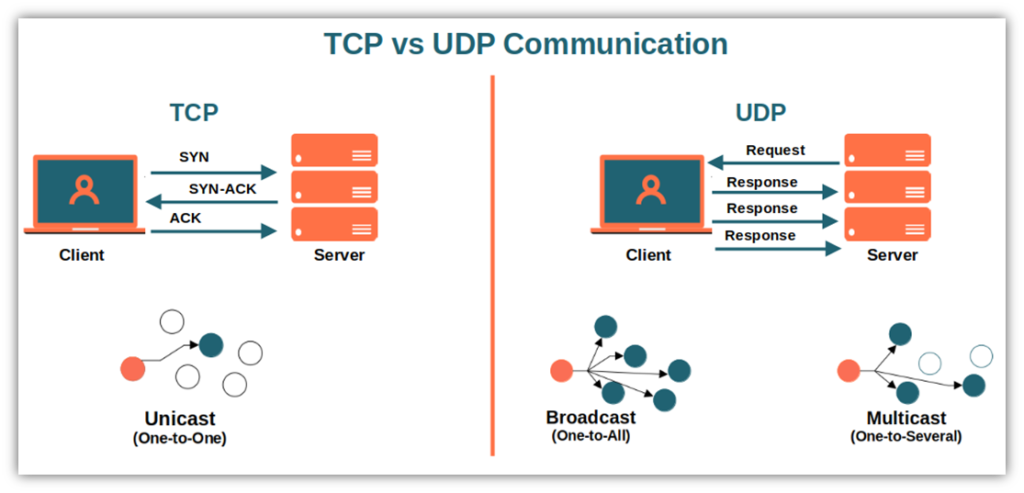
TCP (Transmission Control Protocol)
TCP is safe, reliable, and ordered.
Think of TCP like a courier service 📦:
Confirms delivery
Resends lost packages
Keeps everything in order
If something goes wrong, TCP fixes it.
UDP (User Datagram Protocol)
UDP is fast, simple, and risky.
Think of UDP like a live announcement on a loudspeaker 📢:
No confirmation
No retries
Some listeners may miss parts
UDP prioritizes speed over accuracy.
Key Differences Between TCP and UDP
| Feature | TCP | UDP |
| Reliability | Guaranteed | Not guaranteed |
| Order | Preserved | Not preserved |
| Speed | Slower | Faster |
| Error handling | Yes | No |
| Connection | Required | Not required |
| Use case | Accuracy matters | Speed matters |
TCP vs UDP — Communication Flow

When to Use TCP
Use TCP when correctness matters more than speed.
✅ Examples:
Loading web pages
Sending emails
File downloads
API calls
Online payments
If even one missing byte is unacceptable, TCP is the answer.
When to Use UDP
Use UDP when speed matters more than perfection.
✅ Examples:
Live video streaming
Online multiplayer games
Voice calls (VoIP)
DNS lookups
If a small loss is okay but delay is not, use UDP.
Real-World Examples (Mapped Clearly)
| Activity | Protocol | Why |
| Web browsing | TCP | Pages must load correctly |
| TCP | No data loss allowed | |
| Video call | UDP | Lag is worse than loss |
| Online gaming | UDP | Speed > accuracy |
| File download | TCP | Full file must arrive |
Where Does HTTP Fit In?
This is where beginners get confused.
HTTP ≠ TCP
They solve different problems.
TCP → How data moves
HTTP → What the data means
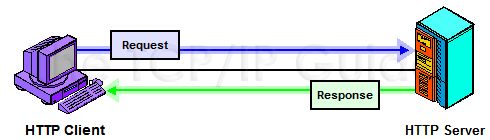
HTTP is an application-level protocol used for:
Requesting web pages
Sending form data
Talking to APIs
HTTP Runs on Top of TCP
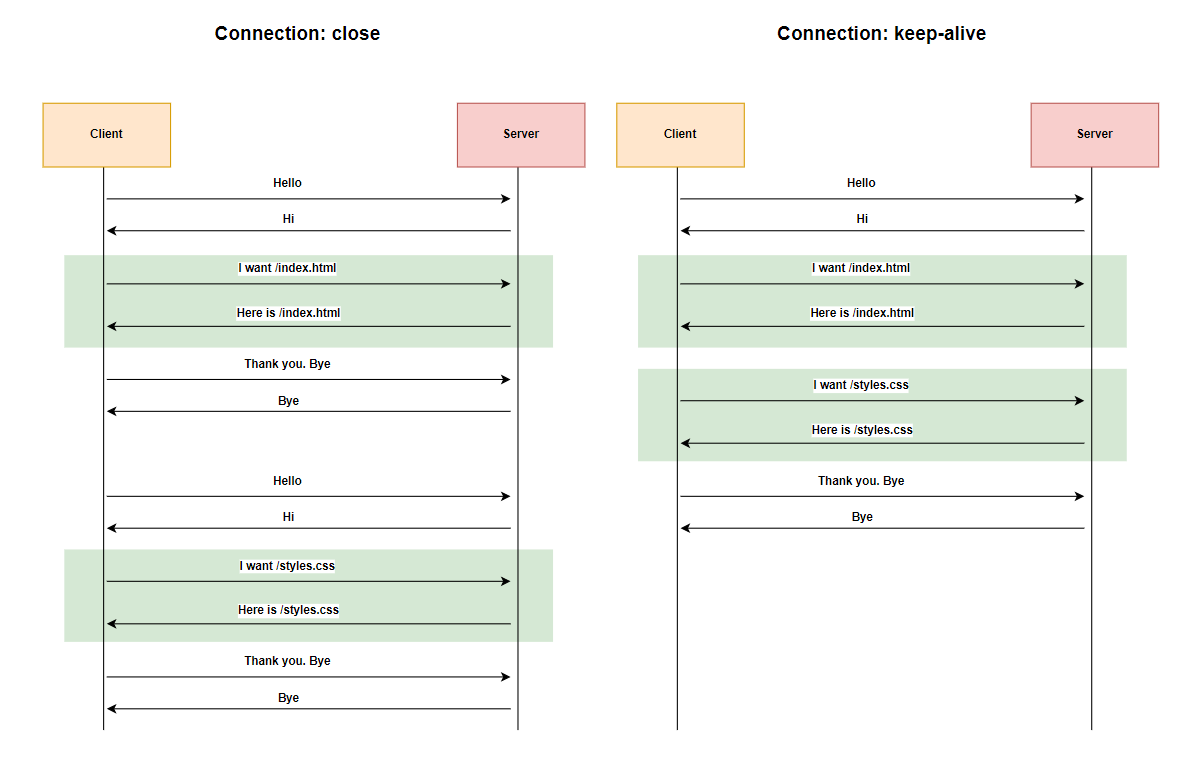
Think in layers:
TCP creates a reliable connection
HTTP sends requests and responses using that connection
👉 HTTP depends on TCP, not the other way around.
Why HTTP Does NOT Replace TCP
Because HTTP:
Does not handle packet loss
Does not guarantee delivery
Does not manage connections
TCP handles all of that before HTTP even starts.
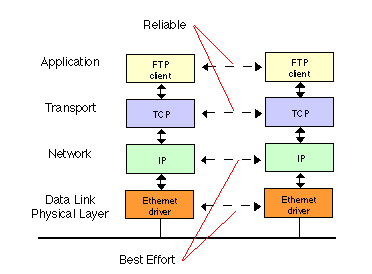
OSI / TCP-IP Layers (Simplified)
Simple view:
Application layer → HTTP
Transport layer → TCP / UDP
Internet layer → IP
Network layer → Physical network
Common Beginner Question
“Is HTTP the same as TCP?”
❌ No
✔ Correct mental model:
HTTP is the language
TCP is the delivery system
You can’t speak HTTP without TCP carrying it.
One-Line Summary
TCP = safe, reliable, slower
UDP = fast, risky, no guarantees
HTTP = rules for web communication
HTTP runs on TCP, not instead of it


